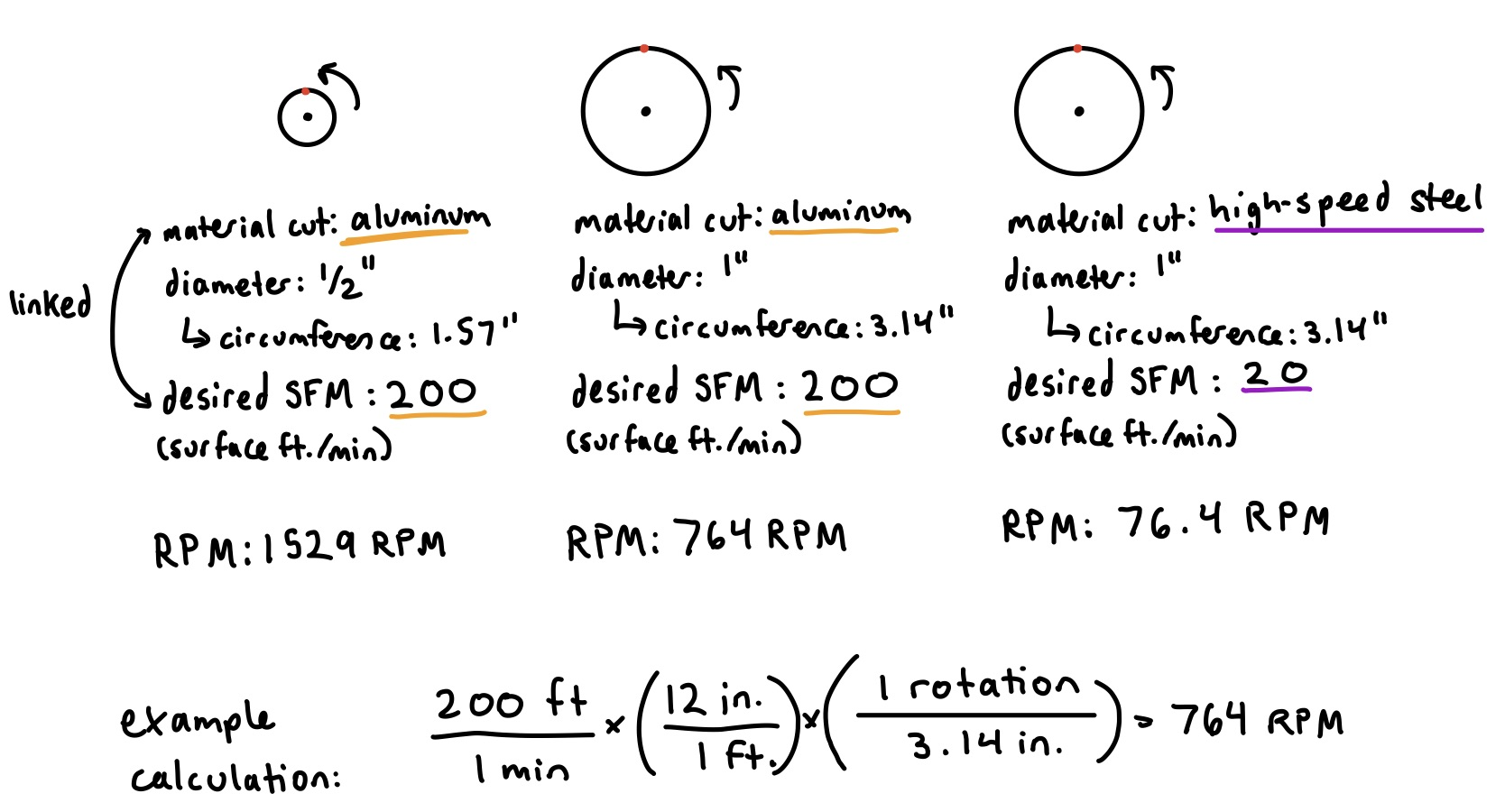
Why are the tools set to different RPM’s?
The diameter of the tool plays an important role. With the same RPM, the edges of a tool with a bigger diameter will travel a greater distance per minute than a smaller one. Therefore, a large drill should rotate at lower RPMs and a small tool should be at higher RPMs to cover the same footage in the same amount of time.
The material you are cutting also impacts RPM. If you are cutting a hard material (i.e. steel), you should cut with slower RPMs than if you are cutting a soft material (i.e. aluminum).
Tool material has the opposite effect. If you are using a hard tool, like steel, it can handle higher/faster RPMs than slower, softer tools, like aluminum. Typically, you do not have to worry about this, because most drill bits and end mills are made of steel. Here are some resources for more information:
Cutting speeds (note that this chart describes cutting different materials with the same type of drill)