What should chips look like?
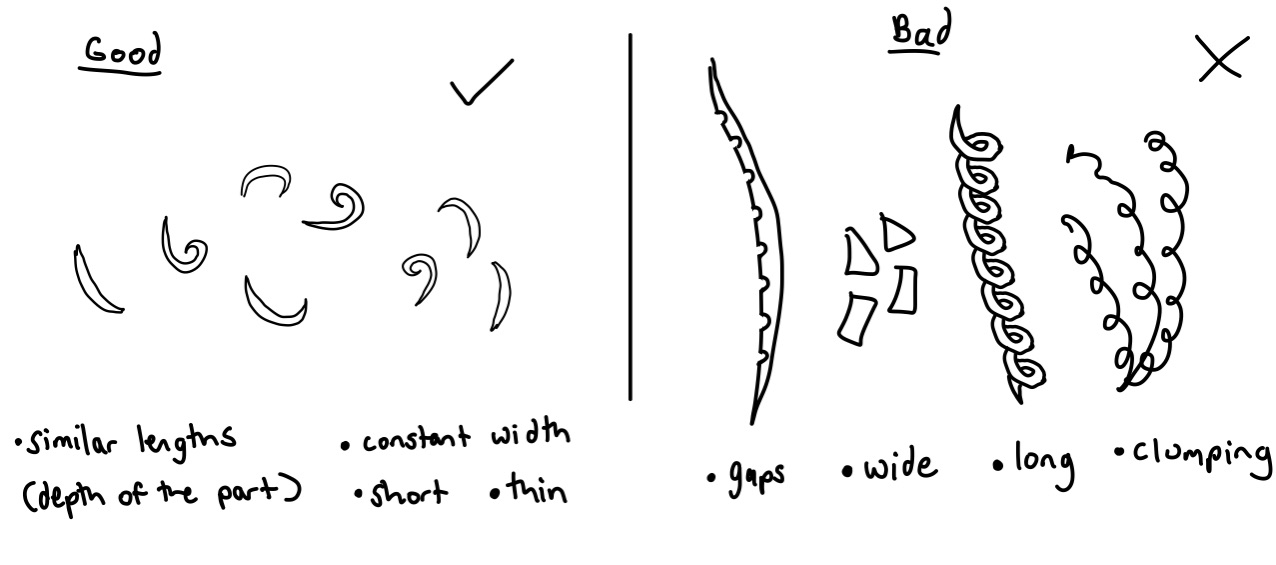
Chips should look like thin, small spirals or lines of constant width and length. If your chips start looking like long helices, wide chunks, or perforated bands, these are signs that the machine is not operating as intended, and that what you are doing could be damaging the tool or part. Here are some common problems with chips and how to troubleshoot them:
Chips are packing: you may be trying to cut more than what is best for the endmill. Try decreasing how much you’re cutting off for each pass or using an end mill with fewer flutes.
Chips are too long and stringy: your feed rate may be too low, or the heat of the machine may be preventing the tool from breaking the chips. Try increasing the feed rate and using coolant.
Chips have gaps in them: this could be a sign of chatter. Try changing the feed rate (either increasing or decreasing) or using an endmill with fewer flutes.
For a slow motion video of good chip formation, see here (a couple minutes later, you can see chatter/bad chip formation!)